Visiting Hallstatt Salt Mine and Skywalk: Guide & Restaurant
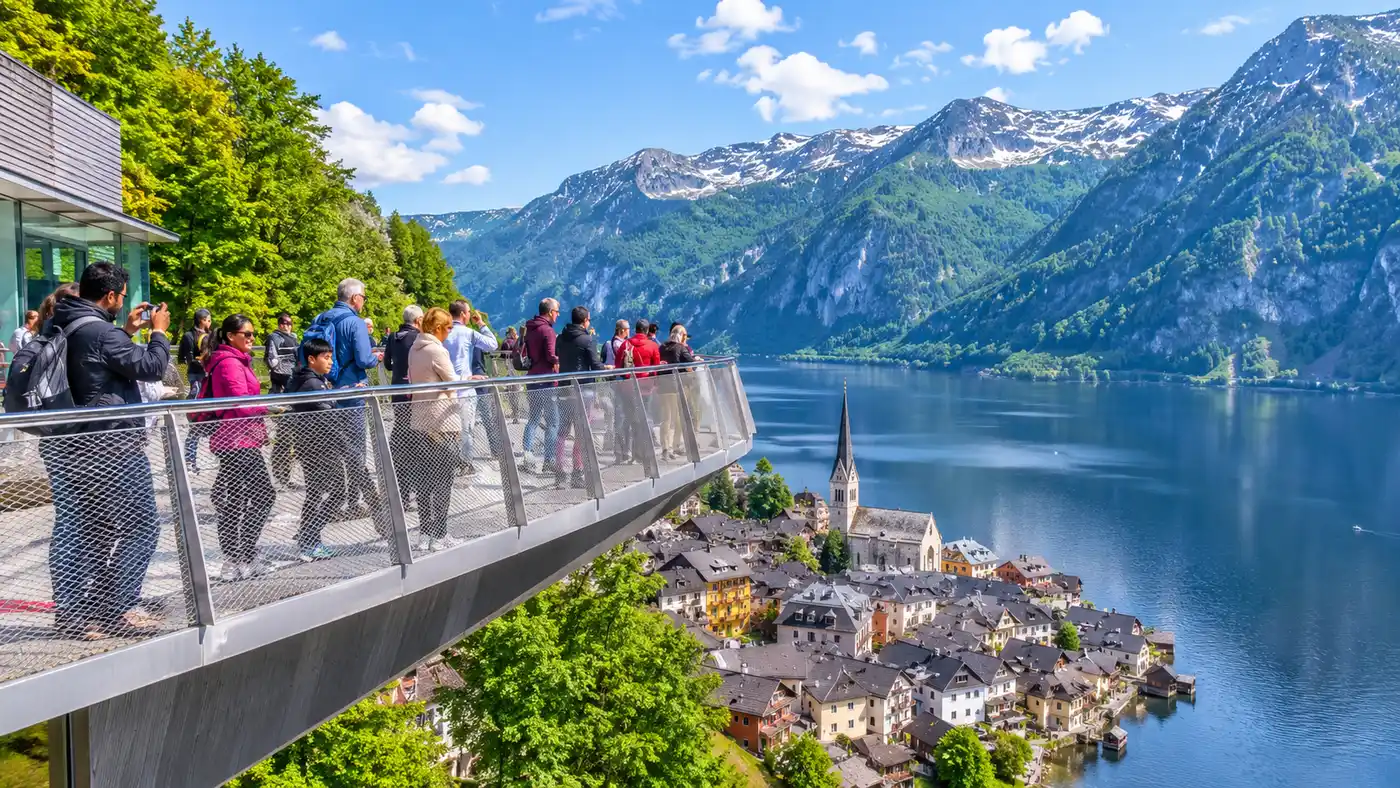
Most people get off the ferry at Hallstatt, snap sixty photos of the postcard church tower, buy an overpriced pastry, and leave before lunchtime. If you only do that, you miss the entire reason this village exists in the first place. Sitting roughly 360 meters straight up the cliff face is the hallstatt salt mine and skywalk, perched together on the ancient Salzberg mountain. The salt deposit hidden inside these limestone tunnels drew Celtic miners here over 7,000 years ago, turning a tiny ledge of rock by a dark alpine lake into one of the wealthiest trading hubs in prehistoric Europe.
Today, the two attractions are bundled together just above the town roofs. You step out onto an impossibly sharp steel triangle jutting into midair, take in the whole Hallstättersee basin, and then walk five minutes through the forest to slide down wooden miners' chutes deep inside the mountain. When your legs are tired and your jacket smells like damp subterranean pine, you can sit down with a plate of hot dumpling soup in a 13th-century stone defense tower. It makes for an incredible day out, provided you navigate the crowds and get the timing right.
Book your hallstatt skywalk experience:
The Salzberg Experience: How the Salt Mine and Skywalk Connect
Everything sits on the Salzberg plateau high above Hallstatt. The two attractions are technically managed by the same company, operating under the name Salzwelten GmbH. When you buy your passes at the valley station near the parking lots, you are buying into a shared complex. The steep Salzbergbahn funicular whisks you up 325 vertical meters in just under three minutes, dropping you at the doorstep of the mountain ridge.
From the top station exit, a panoramic bridge and lift carry you past the historic Rudolfsturm tower directly out onto the famous viewing platform. You could technically visit the salzwelten hallstatt skywalk, stare at the lake for ten minutes, and ride straight back down without touching the mine. Doing that would be a genuine waste of a trip up the cliff.
The entrance to the mine itself sits another 15 minutes further up an easy walking path. You meander past outdoor archaeological digs, interpretive signs detailing Bronze Age burials, and mossy pine roots. It feels completely distinct from the crowded lake promenade below. Up here, the air smells sharper, the wind cuts harder, and the towering peaks of the Plassen range dominate the skyline behind you. Plan to treat them as one cohesive three to four-hour adventure instead of two separate stops.
Pro tip: Head straight past the viewpoint when you first step off the funicular and tour the mine first thing in the morning; the photography light on the lake is much better in the early afternoon anyway.
Inside the Oldest Salt Mine in the World
Entering the mine tunnels requires slipping into a pair of oversized protective cotton overalls that make everyone look like neon mechanics. The guides hand them out based on rough guesses of your height. You zip up, tuck your camera strap inside, and follow the guide into the Christina tunnel, which was blasted open back in 1719. The temperature drops instantly to around 8 degrees Celsius (46 Fahrenheit). It stays that cold whether it is snowy January or sweltering August.
Walking through the mine is surprisingly physical. You walk along narrow wooden floorboards laid between vintage rail tracks, touching cold rock walls veined with glossy, translucent streaks of rock salt. The highlight for almost everyone comes when the path suddenly ends at the top of a slick 64-meter polished wooden slide. Miners built these to shoot between underground levels quickly without ladders. You sit in pairs, cross your ankles, lean back against each other, and drop down into the black abyss. A small radar gun snaps a photo and clocks your speed at the bottom, usually around 25 to 30 kilometers per hour if you do not drag your heels.
Deeper in the mountain, the tour moves past an underground salt brine lake lit with eerie blue and gold projectors. You see the prehistoric wooden staircase discovered in 2002, dated to 1344 BC, which makes it the oldest preserved wooden staircase in Europe. The guide talks about the Hallstatt period of the early Iron Age, showing how ancient workers used bronze pickaxes and carried sheepskin sacks filled with rock salt chunks on their backs. The tour ends with a ride out on a rattling wooden mine train where you sit straddling a long wooden bench as it zooms through narrow stone archways back into daylight.
- Temperature underground: constant 8°C (46°F), so bring pants and a decent sweater even during heatwaves.
- Slide etiquette: keep your hands tucked flat across your chest and never touch the polished wood while moving.
- Total tour duration: roughly 90 minutes underground, plus 30 minutes walking to and from the mine building.
- Physical requirements: about 2 kilometers of walking and numerous stair flights inside damp corridors.
Stepping Out on the Hallstatt Salt Mines Skywalk Welterbeblick
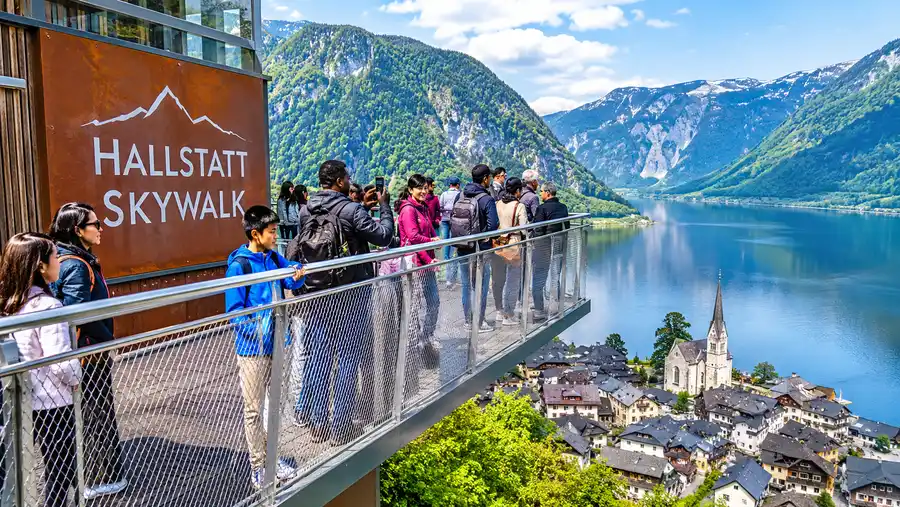
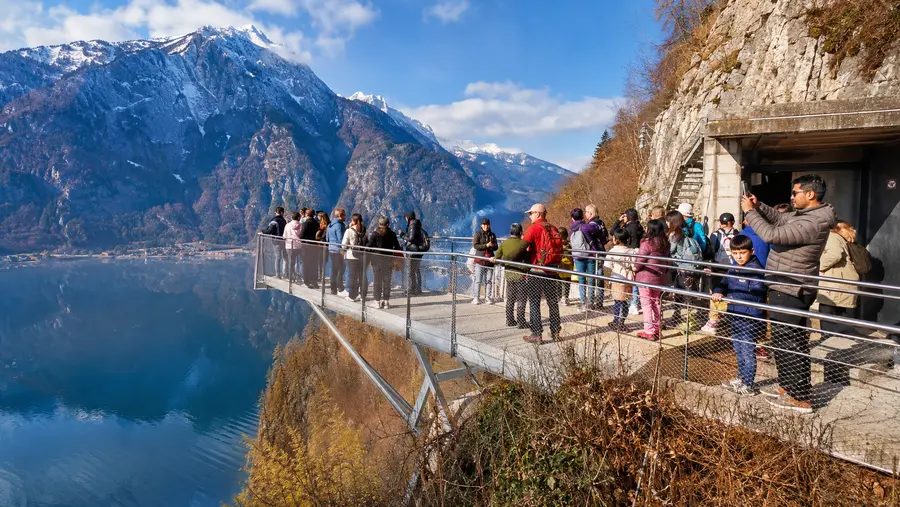
After surfacing from the cold tunnels, the outdoor light feels blinding. Walking back down the gravel trail brings you to the salt mine hallstatt austria skywalk of hallstatt, officially named the Welterbeblick. It hovers dramatically over the abyss, held in place by massive steel tie-rods sunk directly into the limestone rock face.
The platform extends 12 meters outward into thin air. At the pointed tip, the steel mesh flooring gives way to a clear glass floor panel where you can look straight down between your shoes onto the miniature wooden shingles of Hallstatt village, 360 meters below. It feels wild. Tour boats look like water bugs tracing white ripples across the glassy surface of the Hallstättersee. Directly across the water, the steep slopes of the Obertraun valley and the jagged peaks of the Dachstein plateau fill the horizon.
Lines form at the tip of the triangle. People wait ten or fifteen minutes just to get an unobstructed solo photo pointing out toward the water. If you get nervous around steep drops, the platform is broad enough near the base that you can lean against the sturdy steel railing without looking directly beneath your boots. On windy afternoons, the air rushes up the cliff face with surprising force, carrying the sound of church bells from the village square straight up to the platform deck.
Note: Tripods and selfie sticks are clumsy here; security guards frequently ask visitors to pack large camera mounts away if the platform gets crowded.
Book your hallstatt skywalk experience:
Tickets, Logistics, and Route Planning
Sorting out your hallstatt salt mine and skywalk tickets in advance is the smartest thing you can do on this trip. The funicular lines get silly by 10:30 in the morning, and the mine tours have strict capacity limits for safety reasons underground. You can reserve timed-entry slots online through the official booking portal, which lets you bypass the main ticket counter line at the valley station.
If you prefer walking, you can bypass the Salzbergbahn funicular completely. An alpine hiking trail zigzags up from the village cemetery through dense beech woods, taking about 45 to 60 minutes of steady uphill effort. It saves roughly twenty euros, gives your calves a serious workout, and avoids the crowded cable car lines. For full details on trail directions and difficulty, read our guide to hiking up to the salt mine before setting out on foot.
Here is a breakdown of how the visit breaks down depending on how much time and energy you want to spend on the mountain:
| Ticket & Route Option | Average Cost | Time Needed | Best Suited For |
|---|---|---|---|
| Full Tour: Funicular + Mine + Skywalk | €40.00 | 3.5 - 4.5 hours | First-time visitors wanting the complete experience |
| Funicular Roundtrip + Skywalk Only | €22.00 | 1.0 - 1.5 hours | Photographers and travelers short on time |
| Hike Up / Hike Down + Mine Tour Only | €29.00 | 4.0 - 5.0 hours | Budget travelers and active hikers |
| One-Way Funicular + Skywalk (Hike Down) | €13.00 | 2.0 hours | Those who enjoy downhill walking with valley views |
For current seasonal discounts, child fares, and family passes, check out the breakdown of ticket prices and packages. Be aware that the mine closes down for maintenance during parts of the late winter, while the outdoor skywalk and the funicular usually remain open across most months unless heavy ice threatens the track.
Dining at the Rudolfsturm: Hallstatt Skywalk Restaurant
Perched right at the edge of the cliff, next to the funicular station, sits Restaurant Rudolfsturm. The building itself is fascinating. It was erected between 1282 and 1284 by Duke Albrecht I of Austria as a fortified defense tower to protect the lucrative salt pans from raids by the Archbishop of Salzburg. In the centuries that followed, it housed the salt mine operations manager. Today, it operates as the skywalk hallstatt restaurant, boasting one of the most stunning outdoor dining terraces in the entire Salzkammergut region.
Grabbing a wooden bench along the terrace perimeter lets you eat lunch while staring down at paragliders floating hundreds of feet below you. The food is traditional Austrian mountain fare: dense, salty, and designed to fuel people working cold timber mills. The Kasnocken (cheese spätzle tossed with melted mountain cheese and topped with crispy fried onions) comes in a heavy cast-iron skillet and hits the spot after hours in an eight-degree salt tunnel. Their goulasch is dark, rich, and served with a hearty bread dumpling.
Prices are slightly higher than down in town, but not ridiculously so. Expect to pay around €16 to €22 for a main dish and about €5.20 for a half-liter draft of Stiegl beer. The service moves fast because the waitstaff deals with thousands of hungry tourists daily, yet they remain surprisingly pleasant if you speak a few words of German. If you only want an afternoon sugar hit, their warm Apfelstrudel served with a lake of vanilla sauce is fantastic alongside a cup of strong Melange coffee.
- Signature dish: hearty Kasnocken served directly in a sizzling black iron pan.
- Best seating: the front terrace tables along the stone perimeter wall; arrive before 11:45 AM to claim one.
- Indoor ambiance: historic wood-paneled dining rooms with thick stone walls if the weather turns rainy.
- Payment: credit cards are accepted, but carrying cash is always wise on high alpine terraces.
Frequently Asked Questions about hallstatt salt mine and skywalk
How long does it take to visit both the salt mine and the skywalk?
You should set aside at least 3.5 to 4 hours. That includes the funicular ride up and down, walking between sites, the 90-minute guided salt mine tour, taking photos on the skywalk platform, and having a quick drink or lunch at Rudolfsturm.
Can you visit the skywalk without touring the salt mine?
Yes. The skywalk itself is entirely free to stand on once you reach the mountain top. You only need to pay for your funicular ticket (or hike up for free), meaning you can skip the salt mine tour if you are pressed for time.
Is the salt mine tour suitable for small children?
Children must be at least 4 years old to enter the salt mine due to safety regulations. The underground slides and train ride are big hits with kids, but strollers are not permitted inside the narrow tunnels.
What should I wear inside the salt mine?
Wear warm clothing layers and sturdy closed-toe walking shoes. The mine stays at a chilly 8°C (46°F) year-round with damp walking surfaces, even when the valley below is warm and sunny.
Quick Reference
- Elevation: 360 meters above town
- Mine temperature: 8°C (46°F) constant
- Funicular ride duration: under 3 minutes
- Minimum age for mine entry: 4 years
- Slide length: 64 meters underground
Book your hallstatt skywalk experience:
My Take
Hallstatt has earned a reputation for being an overcrowded tourist stop, and during peak midday hours down by the water, that criticism is completely fair. Up on the Salzberg, the atmosphere changes. The deep smell of old rock salt, the rush of descending wooden miners' slides, and the panoramic view from the hallstatt salt mine and skywalk give you a real appreciation for why people fought over this narrow mountain shelf thousands of years ago. Book an early morning ticket slot, pack a warm fleece, and spend half your day exploring the cold bones of this mountain before tucking into a skillet of cheese dumplings on the Rudolfsturm terrace.
Read more about hallstatt skywalk.